
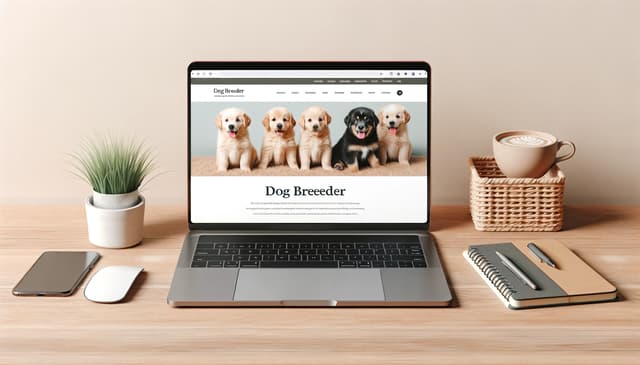
Serious puppy buyers do their homework. Before they contact you, they read your site closely, look for signs that you breed responsibly, and compare you with other breeders. Your website has two jobs: earn that trust, and make the next step obvious.
Decide what the site is for
Pick the main job first. Are you filling a waitlist for future litters, placing puppies available now, or mostly showing how you raise your dogs? One should lead. That choice decides what goes on your homepage and what your main button says.
Then picture your buyer. Often it's a family, or someone new to your breed, nervous about getting it wrong. Write for that person.
The pages every breeder site needs
- Home: a strong photo, one line on who you are and what you breed, and one clear next step, like "Join the waitlist."
- About: your story, how you raise your dogs, and why you breed. This page does more for trust than any other.
- Our dogs: the parents, with photos, temperament and the health testing you've done.
- Litters: current and upcoming litters, each with photos, date of birth, the parents and a status: available, reserved or placed.
- How it works: your process from inquiry to pickup, including the application, deposit, waitlist order and what comes with the puppy.
- Reviews: past buyers and their dogs, in their own words.
- Contact: a short inquiry or application form, plus phone and email.
"How it works" is the page most breeders skip. It answers the questions you get every week and filters out buyers who aren't a fit.
Lead with photos and honest detail
Buyers study your photos. Show the puppies, the parents and where your dogs live, in good light, and keep them current. Pair them with specific detail: lineage, health testing and records, and temperament. Specific, honest detail reads as confidence. Vague praise reads as a sales pitch.
Keep litters current
Nothing loses a buyer faster than asking about a puppy that was placed weeks ago. Update a litter's status as soon as it changes. If that feels like a chore, the site is built wrong for you. You should be able to change a status in a minute, from your phone.
Get found by local buyers
Many buyers start with a search like "[breed] puppies near me" or "[breed] breeder in [state]." To show up:
- Use the phrases buyers actually search in your page titles, headings and copy.
- Give every page its own title and meta description.
- Set up a Google Business Profile and keep it complete.
- Get listed by the breed clubs and directories you belong to.
Our free SEO audit checks the on-page basics of any page in seconds.
When to hire help
With a few pages, a litter or two a year and time to keep things updated, a DIY builder is a fair start. Write your About and "How it works" pages yourself, since nobody can write them better. Bring in help when the site starts costing you time or buyers:
- You answer the same questions by phone and email because the site doesn't.
- Applications and deposits live in your inbox instead of online.
- Litter updates are fiddly, so they fall behind.
- You don't show up when people search for your breed in your area.
- Your site looks dated next to the breeders you compete with.
A good build fixes these once: an application form that asks what you need to know, deposits paid online, litter pages you can update in a minute, and local SEO set up from the start.
What we build for pet businesses
Every pet business faces the same two questions from owners: can I trust you, and how do I get started? For FunDoggy in Miami, which offers structured play, a gym with treadmills, a supervised pool, grooming and training, we built the site around those questions. Facility galleries and the daily routine come first, and day passes, memberships and service bookings are one tap away. See the FunDoggy build and what we build for pet businesses.
FAQ
How much does a breeder website cost? It depends on the number of pages and whether you take applications and deposits online. Our website cost calculator gives you a realistic range in a minute.
Can buyers apply and pay a deposit online? Yes. A form can collect what you need to know before you talk, and deposits can be paid online. If you hire help, make sure the domain and accounts are in your name.
Want it built for you? Book a 30-minute call.